Exploring Cactus SVG, DXF, EPS, JPG, and PNG Files for Creative Projects
Cactus SVG, DXF, EPS, JPG, and PNG files are versatile digital assets that cater to a wide range of creative and professional needs. Whether you're a designer, a business owner, or an online user looking to enhance your digital projects, understanding these file formats can significantly improve your workflow and output quality.
Understanding the File Formats
The collection includes five key file types: SVG, DXF, EPS, JPG, and PNG. Each format has its unique characteristics and use cases, making them suitable for different scenarios. Let's break down what each format offers:
- SVG (Scalable Vector Graphics): These are vector-based files that maintain clarity at any size. Ideal for logos, icons, and illustrations that need to be scaled without losing quality.
- DXF (Drawing Exchange Format): Originally developed for CAD software, DXF files are used in engineering and architectural designs. They support precise geometric data and are often used in manufacturing and construction.
- EPS (Encapsulated PostScript): A versatile format that supports both vector and bitmap graphics. EPS files are commonly used in print design and publishing due to their high-quality output.
- JPG (Joint Photographic Experts Group): A popular raster format known for its compression capabilities. Suitable for photographs and images where file size is a concern.
- PNG (Portable Network Graphics): Another raster format that supports transparency. PNG files are widely used for web graphics and images requiring clear backgrounds.
Why Choose Cactus SVG, DXF, EPS, JPG, and PNG?
The availability of multiple file formats in this collection ensures that users have flexibility in how they use the cactus graphics. For instance, SVG files are perfect for scalable web elements, while JPG and PNG are ideal for online content and social media posts. DXF and EPS files provide precision and compatibility with design software, making them valuable for professionals working on complex projects.
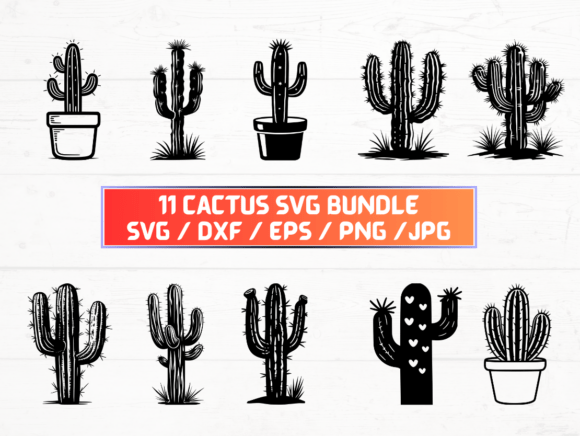
One of the standout features of this collection is the inclusion of 11 files in each format, offering a diverse range of cactus designs. This variety allows users to select the most appropriate graphic for their specific project, whether it's for branding, marketing, or personal use.
Practical Applications
Cactus SVG, DXF, EPS, JPG, and PNG files can be applied in various real-world scenarios. Here are a few examples:
- Branding and Logo Design: SVG files are excellent for creating scalable logos and icons that can be used across different platforms and sizes.
- Print Media: EPS and DXF files are well-suited for print projects such as brochures, posters, and packaging due to their high resolution and precision.
- Web Development: PNG and JPG files are commonly used in website design for background images, banners, and other visual elements.
- Graphic Design: The combination of vector and raster formats allows designers to work efficiently across different mediums and tools.
Considerations and Limitations
While these file formats offer numerous benefits, it's important to consider their limitations. For example, SVG files may not be suitable for complex photo editing, whereas JPG and PNG files might not scale well when enlarged without loss of quality. Additionally, DXF and EPS files require specialized software for editing, which could be a barrier for some users.
It's also worth noting that the quality of the final output depends on the original file's resolution and format. High-resolution files like those included in this collection ensure that your projects look sharp and professional, regardless of the medium used.
Evaluating Suitability for Your Needs
When choosing between Cactus SVG, DXF, EPS, JPG, and PNG files, it's essential to evaluate your specific requirements. If you're working on a project that requires scalability and precision, SVG and EPS files are the way to go. For quick edits and web use, JPG and PNG files offer convenience and ease of use.
For those involved in engineering or architectural design, DXF files provide the necessary detail and compatibility with industry-standard software. Ultimately, the right choice will depend on your project's goals, target audience, and the tools you're using.
Conclusion
In summary, Cactus SVG, DXF, EPS, JPG, and PNG files are powerful tools that can enhance your creative and professional projects. With their versatility, high quality, and wide range of applications, these formats are invaluable for designers, business owners, and creators alike. By understanding the strengths and limitations of each format, you can make informed decisions that best suit your needs and deliver exceptional results.